Classification of Microorganisms
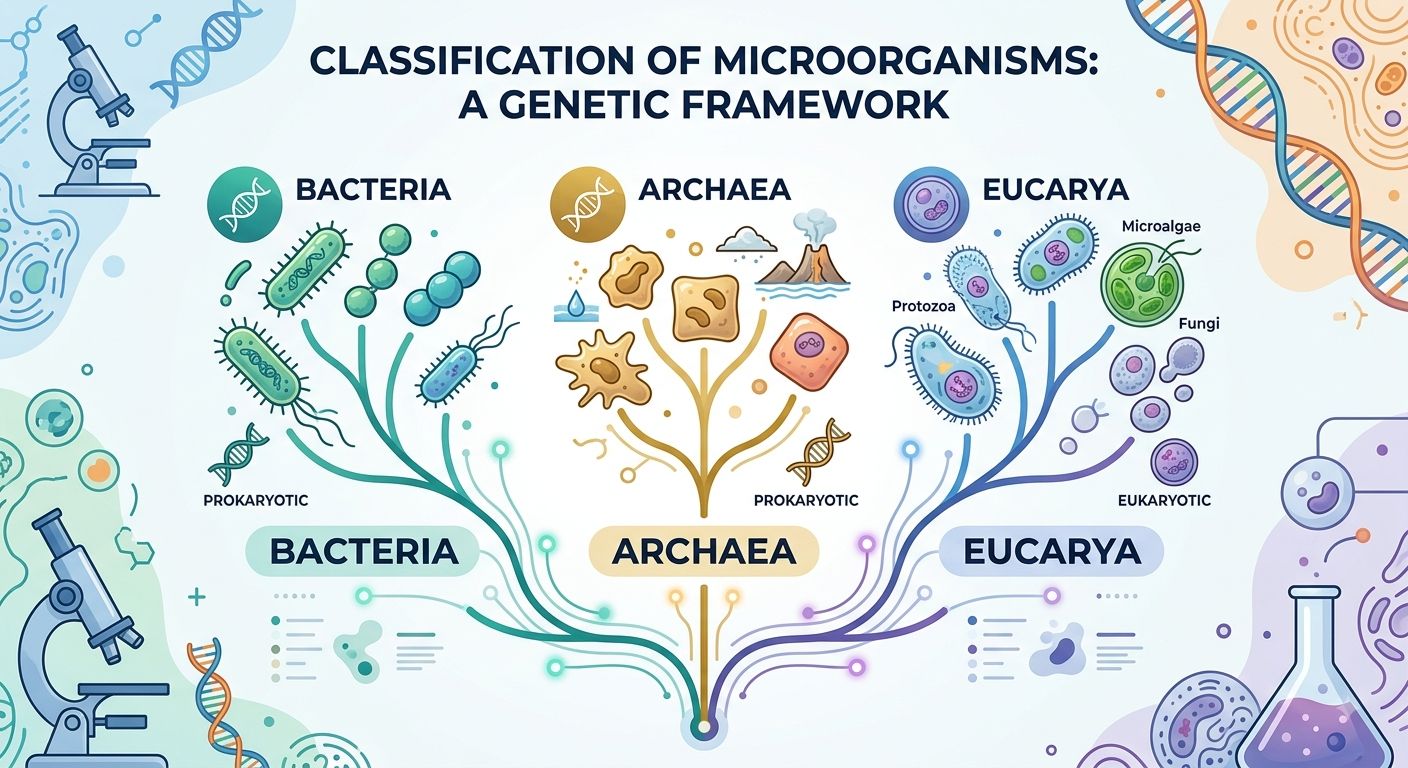
The Three-Domain System
This system provides a broad taxonomic structure that encompasses the diversity of all living things:
- Bacteria: One of the three main domains of life.
- Archaea: A distinct domain separate from Bacteria and Eucarya.
- Eucarya: The domain comprising eukaryotic organisms.
This classification system reflects the fundamental genetic differences discovered between these groups, moving beyond older classification methods.
Methodology (Ribosomal RNA (rRNA) Analysis):
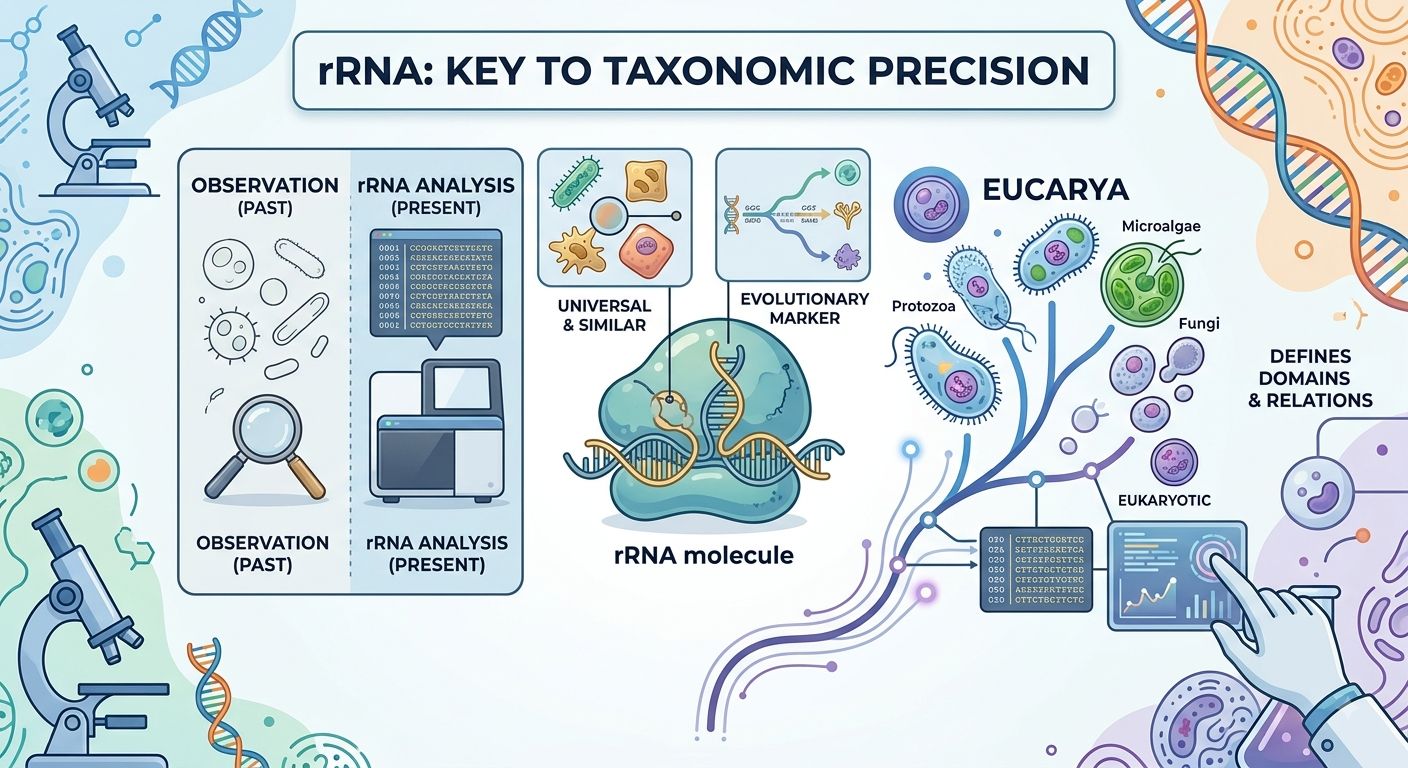
The development of the modern three-domain system was facilitated by advancements in molecular biology, specifically the study of ribosomal RNA. This methodology provides a more granular and accurate understanding of life than previous observation-based systems.
Ribosomal RNA was selected as the primary metric for classification due to its unique properties:
- Ubiquity and Similarity: rRNA is a part of the cell that is highly similar across different species.
- Evolutionary Marker: Because it remains relatively stable over time but contains enough variation to distinguish between groups, it serves as a reliable tool for identifying how different organisms are related.
Impact on Taxonomy:
The shift to studying genetic makeup—specifically rRNA sequences—allows scientists to determine the relatedness of organisms with a high degree of precision. This molecular approach has become the standard for defining the boundaries between the three domains of life.
Conclusion:
The classification of organisms is no longer based solely on physical characteristics but is firmly rooted in genetic analysis. By utilizing the similarities found in ribosomal RNA across species, modern science has established a robust framework (Bacteria, Archaea, and Eucarya) that accurately reflects the evolutionary history and genetic reality of all living things.